Launch offer — valid today only

📄 Digital book in PDF · read it on your phone or print it

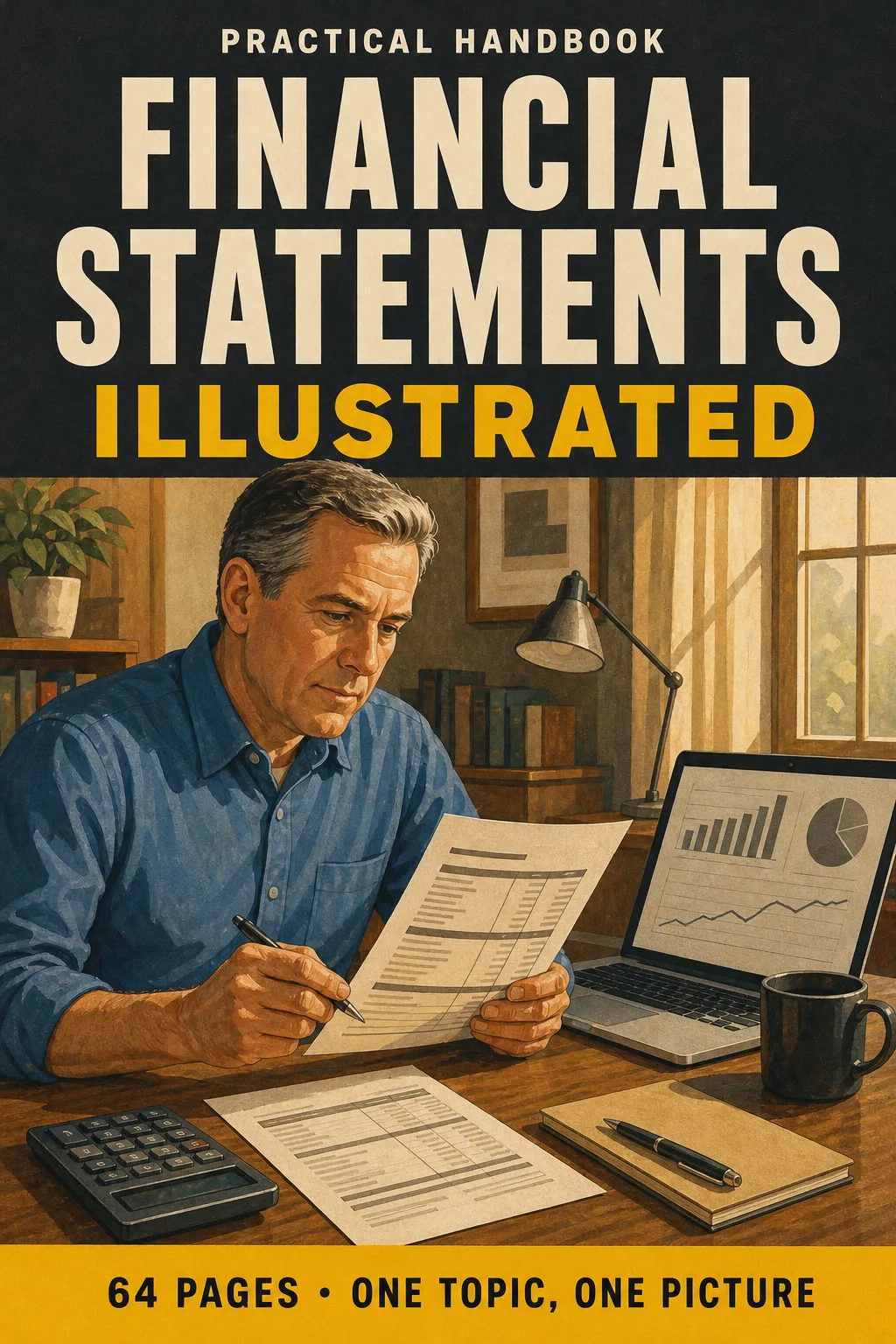
Bookkeeping & Accounting 101: The Three Financial Statements, Illustrated The Same Reading Order Every Time

For bookkeeping and Accounting 101 students and small business owners who get monthly statements from their accountant. The balance sheet, income statement and cash flow statement in US terms: one topic per page, the drawing first, then what you need to remember. 64 illustrated pages.

START STUDYING THIS WAY

🔒 Secure checkout · PDF by email · 30-day guarantee

Every topic, its own pageEach statement drawn, with the explanation right beside it
64 illustrated pages8 parts, from the big picture to the common mistakes
Up-to-date sourcesUS GAAP (ASC 210, 220, 230 and 360) and IRS Publication 538
PDF by emailFormat

Look Inside the Book

Every page has one big drawing and a box with the numbers and steps you need to know:

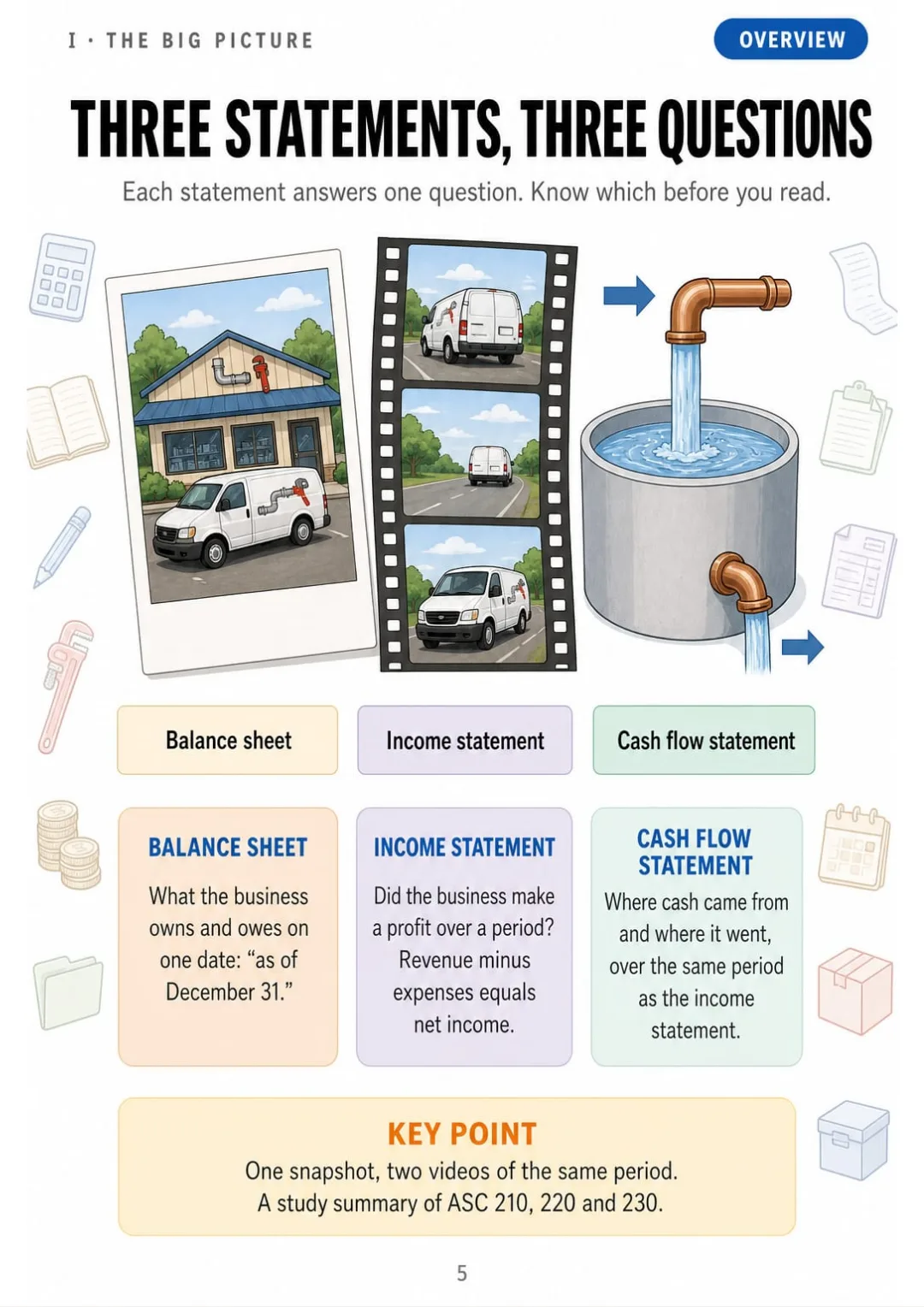
Balance sheet = one day · Income statement = profit over a period · Cash flow = where the cash went
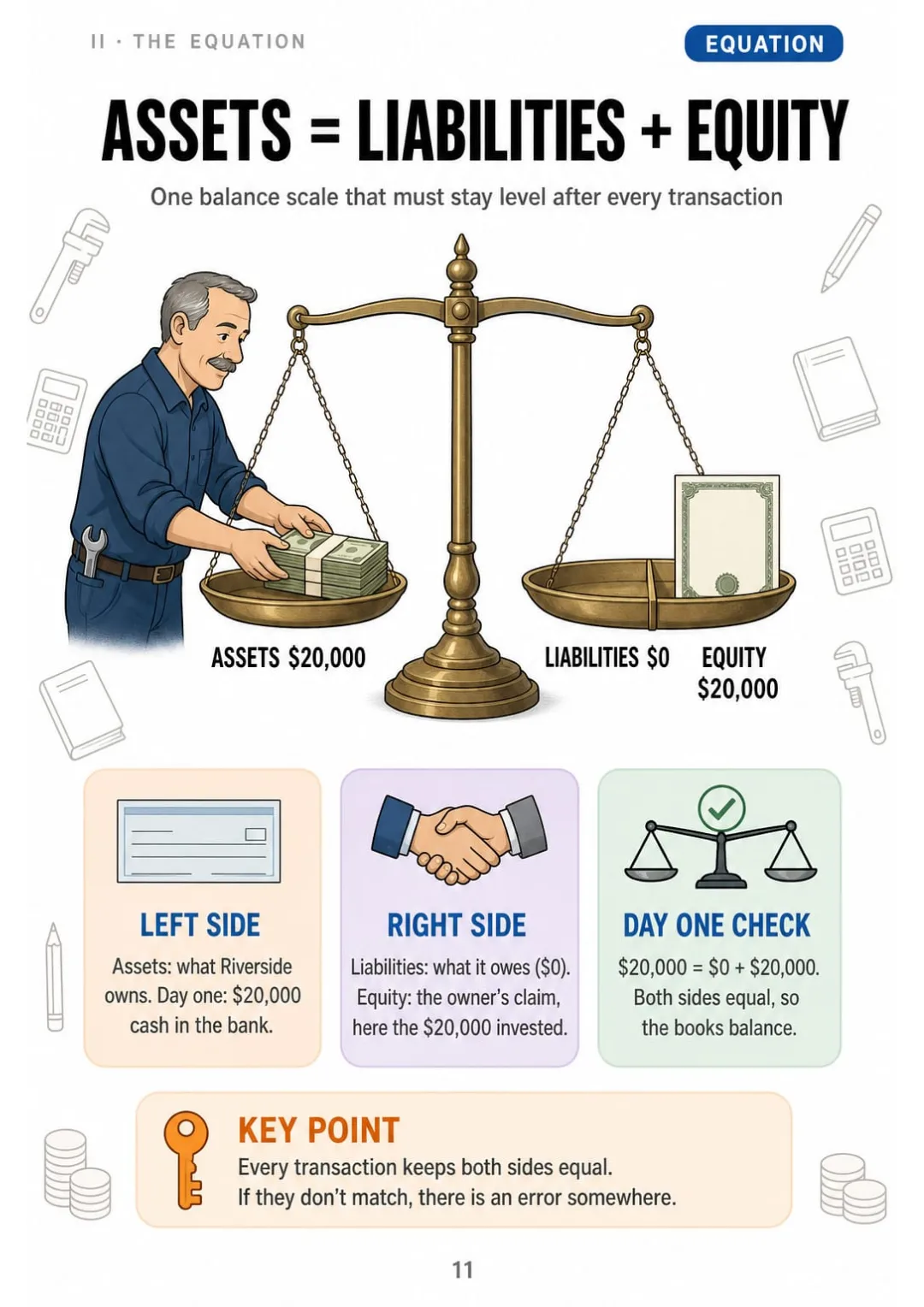
Riverside day one: Assets $20,000 = Liabilities $0 + Equity $20,000
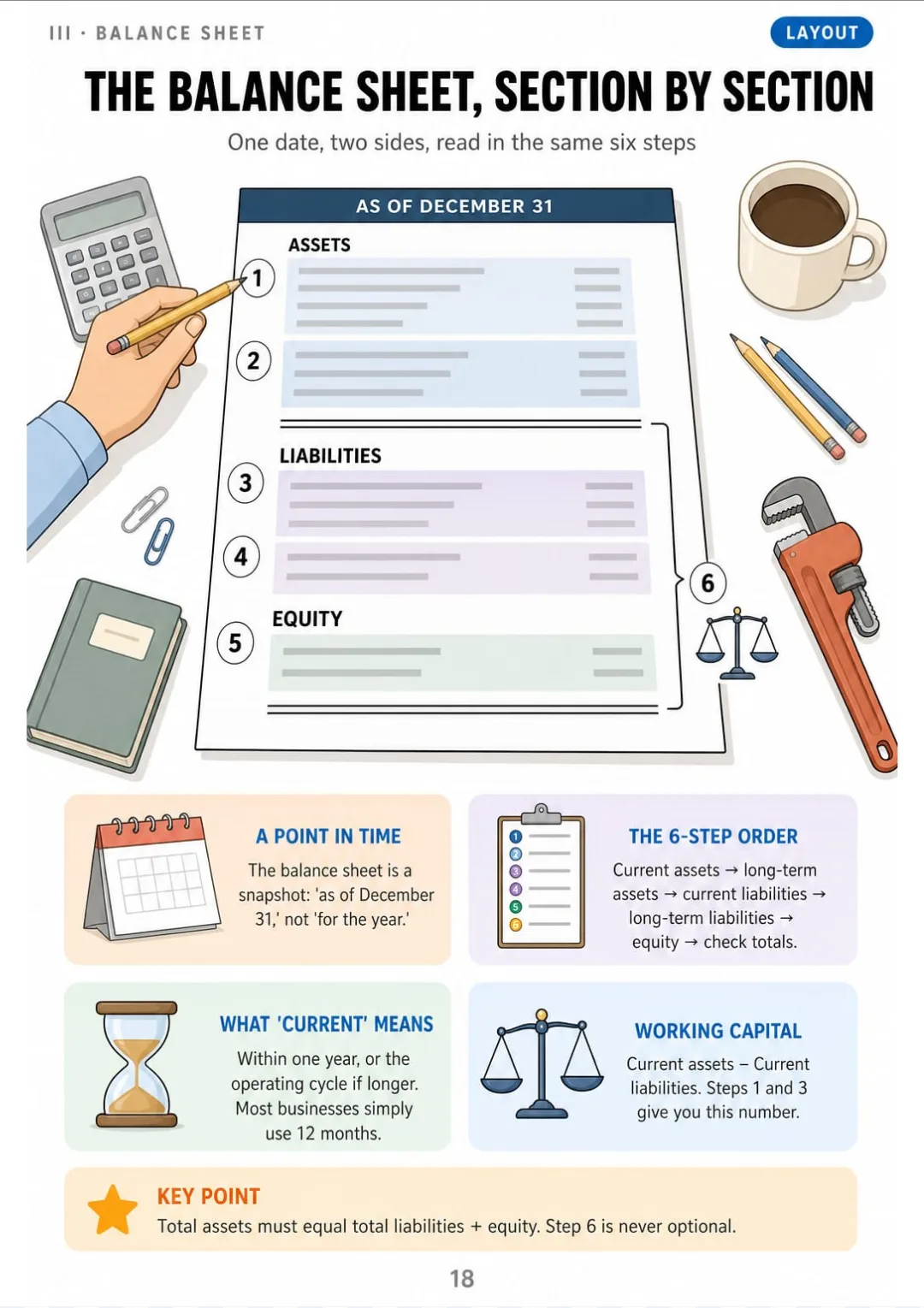
Current assets → long-term assets → liabilities → equity → totals match.
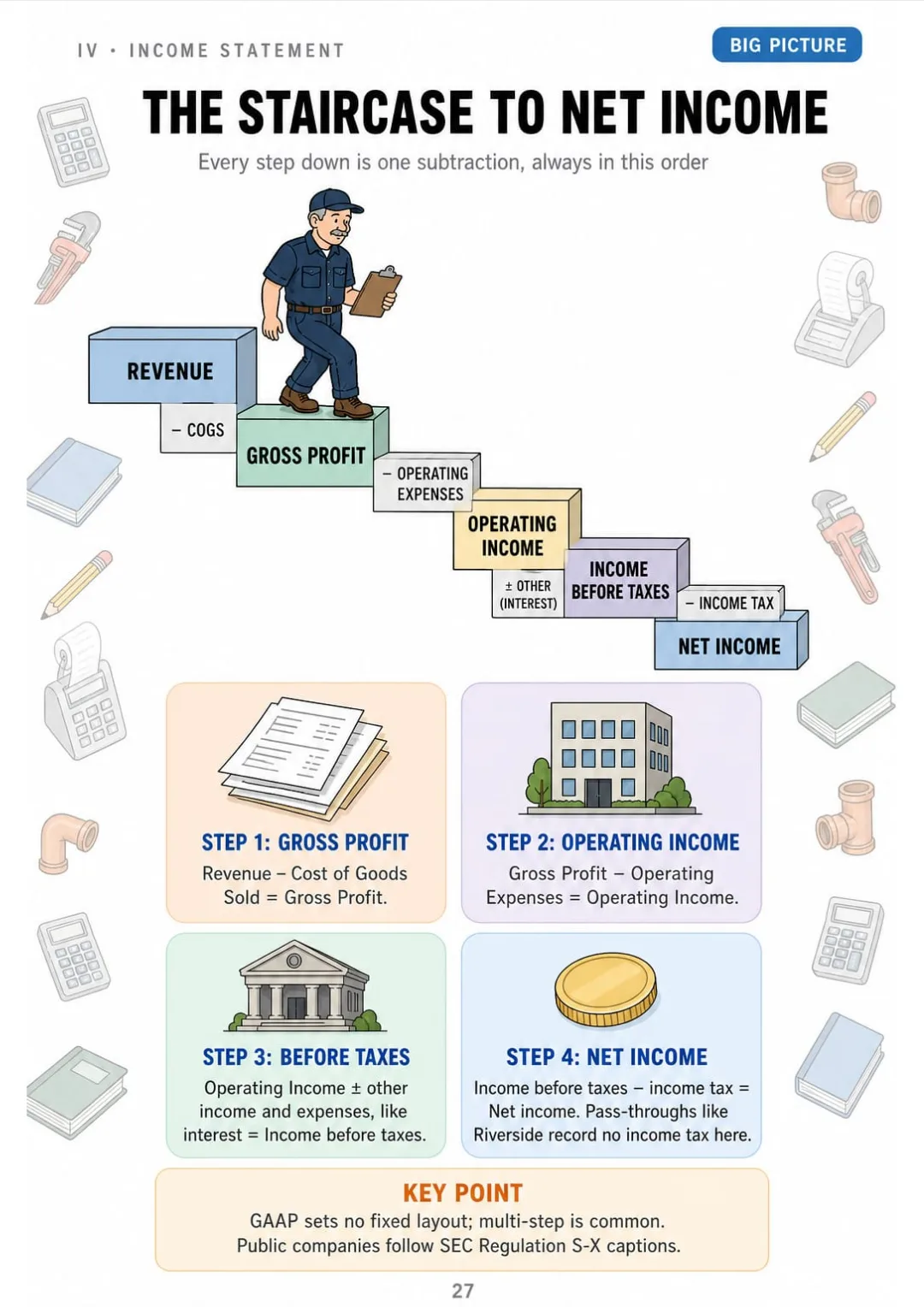
Revenue → gross profit → operating income → income before taxes → net income, one subtraction per step.
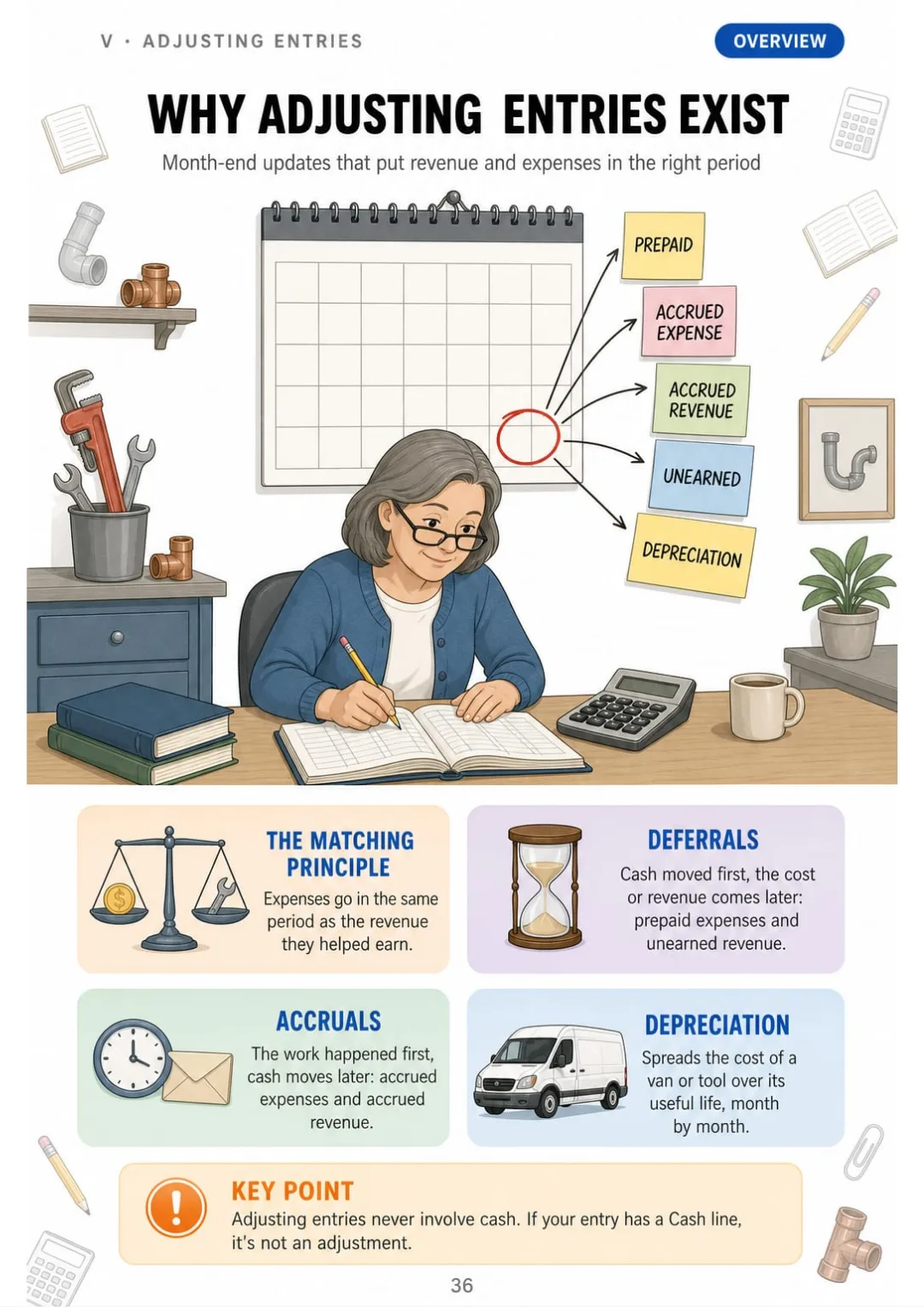
The main types of adjusting entries on one month-end calendar: none of them touches cash.
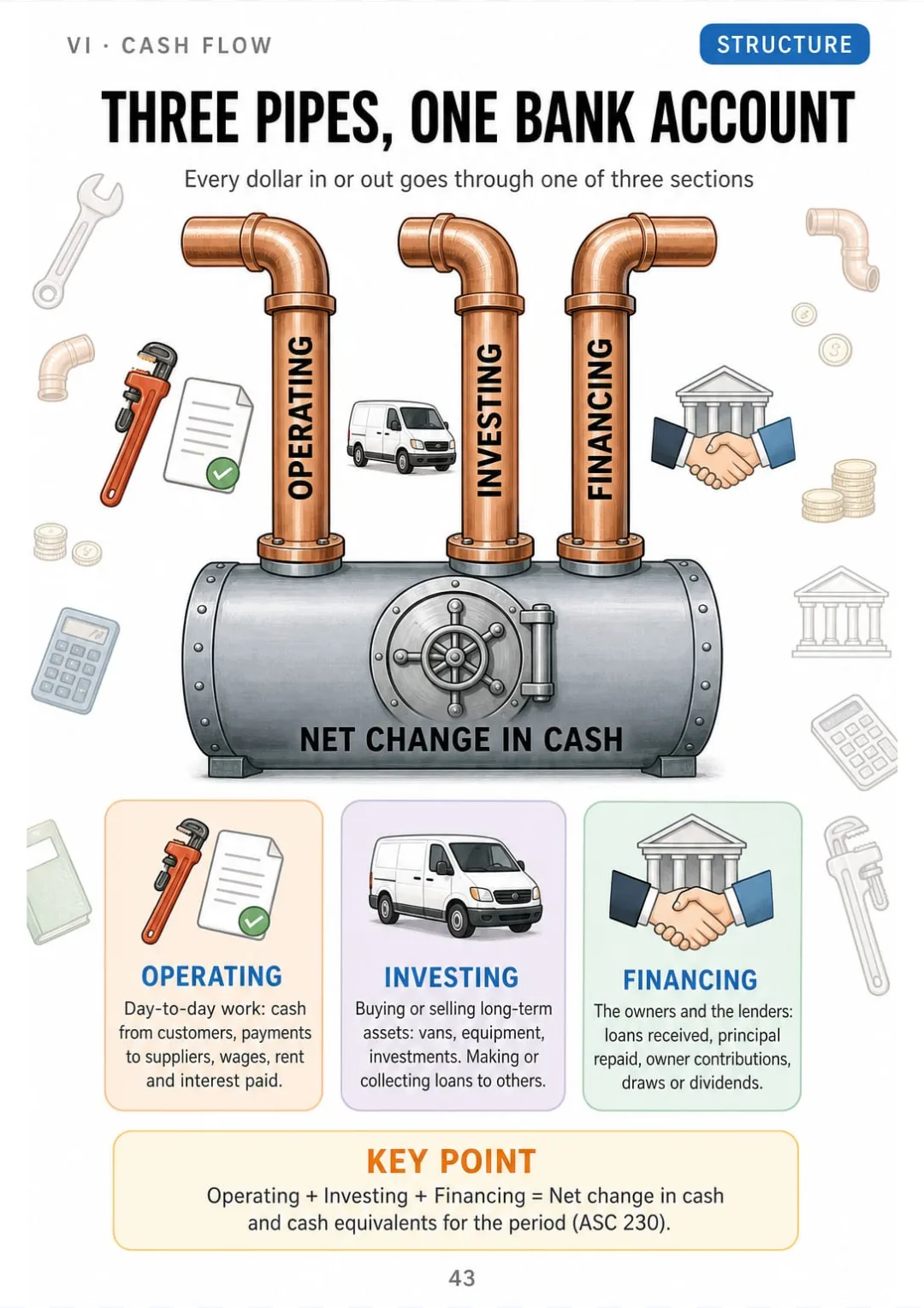
ASC 230: operating + investing + financing = net change in cash.
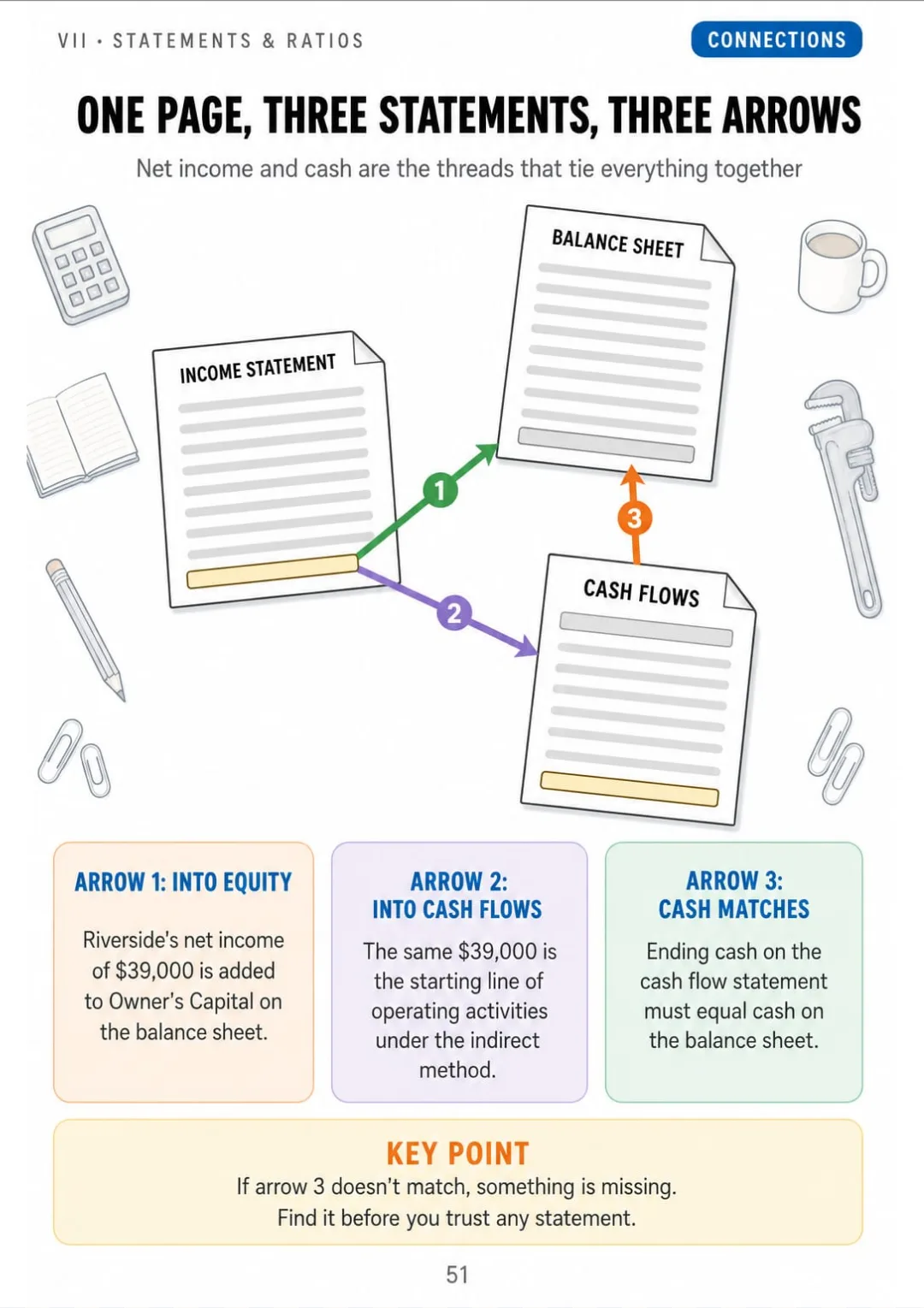
Net income $39,000 feeds equity and cash flows; ending cash equals balance sheet cash.
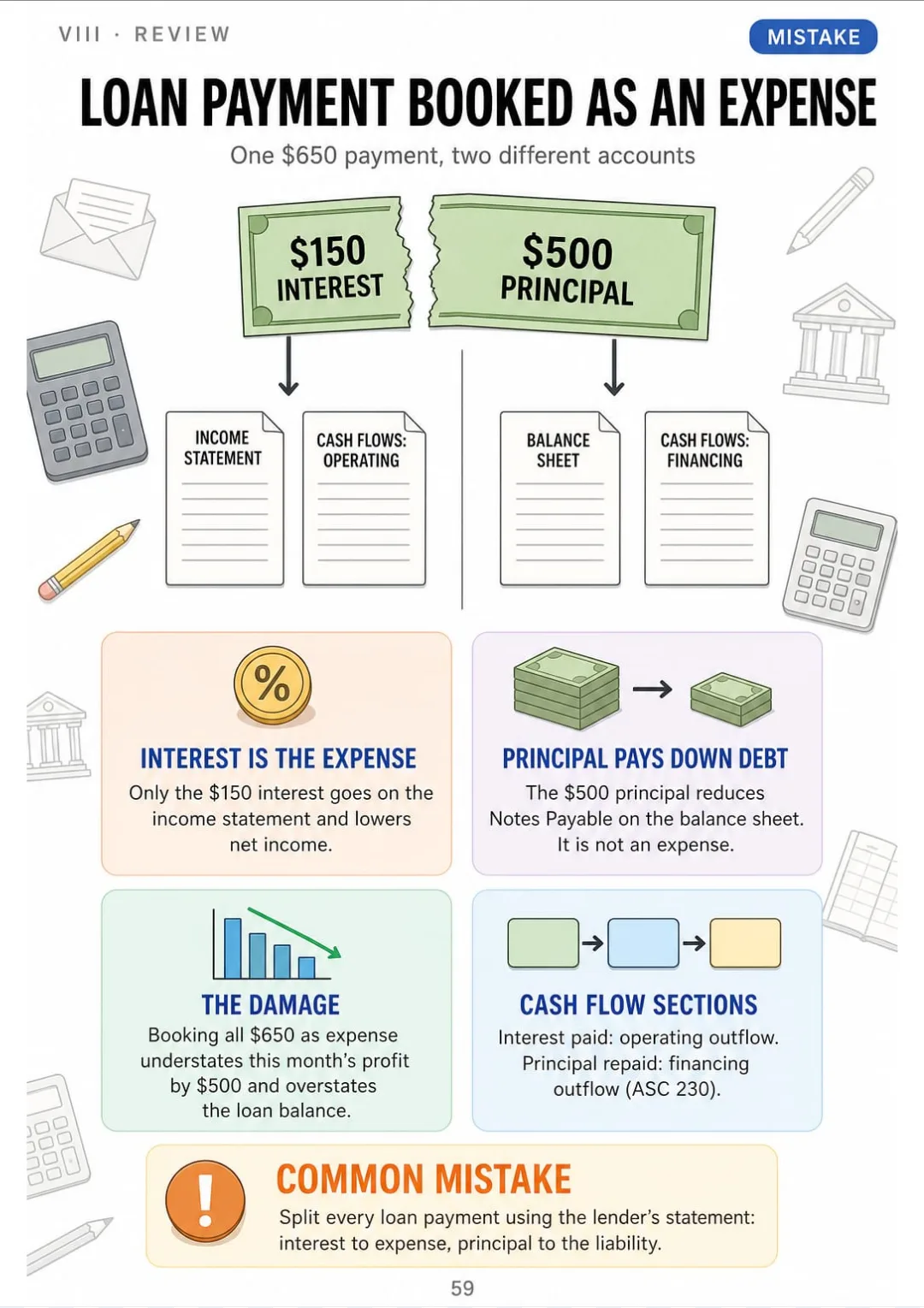
$650 loan payment: $150 interest expense, $500 principal off Notes Payable

Swipe to see more →

These are real pages from the book. The table of contents is the full one: 8 parts and 60 topics.

The Problem Isn't You. It's How It Was Explained to You.

Your accountant emails the monthly balance sheet. You open it and see one long column: cash, receivables, equipment, notes payable, retained earnings. On the call you nod, but you couldn't say where one section ends and the next begins.

So you go back to the textbook. Classifying assets and liabilities takes four pages of paragraphs: liquidity, operating cycle, twelve months, exceptions. By the bottom of the page, the top is gone.

Current assets → long-term assets → liabilities → equity → totals match.

In the book, that same balance sheet is one page: current assets at the top, then long-term assets, then liabilities, then equity, and the two totals side by side with an arrow showing they match. Four sections, always read in the same order.

The same goes for the question that keeps you up at night: the income statement says you made money and the bank account is empty. In the book, one page puts profit and cash side by side and shows where the difference went: receivables, inventory, equipment, loan principal and owner's draws.

The next time the statement lands in your inbox, you read it top to bottom, section by section, and you know what each line means without opening the textbook.
COMPARE FOR YOURSELF

The Same Topic, Two Ways to Study It

THIS
  • The textbook: line after line
  • The accounting equation explained only in words
  • You walk into class or the exam still unsure
The fundamental accounting equation, Assets = Liabilities + Owner's Equity, expresses the relationship between the economic resources controlled by an entity and the claims against those resources held by creditors and owners. Under the double-entry system, every transaction affects at least two accounts in such a manner that the equality of the equation is preserved. Consequently, an increase in total assets must be accompanied by a corresponding increase in liabilities or equity, or by an offsetting decrease in another asset account, thereby maintaining equilibrium at all times.
FOR THIS
  • The accounting equation drawn as a scale
  • The dollar amounts in one box
  • You see it and you get it
Riverside day one: Assets $20,000 = Liabilities $0 + Equity $20,000
CONTENTS

Take a Look at the 8 Parts and 60 Topics

The big picture, the accounting equation, the balance sheet, the income statement, adjusting entries, the cash flow statement, connecting the statements and ratios, and a final review of common mistakes: 64 pages, all illustrated.

IThe Big Picture · pp. 5-10
  1. Three Statements, Three Questions
  2. Meet Riverside Plumbing: Our Example All Book Long
  3. The Reading Order: Always the Same 3 Steps
  4. Cash Basis vs. Accrual Basis
  5. The Accounting Period and the Fiscal Year
  6. Who Reads the Statements and What They Look For
IIThe Accounting Equation · pp. 11-17
  1. Assets = Liabilities + Equity: The Scale
  2. Every Transaction Moves Two Things
  3. The 5 Account Types
  4. Debits and Credits Without Memorizing
  5. The T-Account
  6. The Journal Entry
  7. From Journal to Ledger to Trial Balance
IIIThe Balance Sheet · pp. 18-26
  1. Balance Sheet Layout Section by Section
  2. Current Assets
  3. Accounts Receivable and Allowance for Doubtful Accounts
  4. Inventory: What It Is and What It Isn't
  5. Fixed Assets (PP&E) and Accumulated Depreciation
  6. Current vs. Long-Term Liabilities
  7. Owner's Equity vs. Stockholders' Equity
  8. Retained Earnings and Owner's Draws
  9. Reading Riverside's Full Balance Sheet
IVThe Income Statement · pp. 27-35
  1. The Staircase: From Revenue Down to Net Income
  2. Revenue: When Is It Earned?
  3. Cost of Goods Sold
  4. Gross Profit and Gross Margin
  5. Operating Expenses
  6. Operating Income vs. Net Income
  7. Single-Step vs. Multi-Step Format
  8. Income Taxes: Pass-Through vs. C Corporation
  9. Reading Riverside's Full Income Statement
VAdjusting Entries · pp. 36-42
  1. Why Adjusting Entries Exist
  2. Prepaid Expenses
  3. Accrued Expenses
  4. Accrued and Unearned Revenue
  5. Straight-Line Depreciation
  6. The Adjusted Trial Balance
  7. Closing Entries
VIThe Cash Flow Statement · pp. 43-50
  1. Three Sections: Operating, Investing, Financing
  2. Classifying Cash Flows
  3. The Indirect Method, Step 1: Start From Net Income
  4. The Indirect Method, Step 2: Working Capital Changes
  5. Direct Method vs. Indirect Method
  6. Investing and Financing Activities
  7. Net Change in Cash Must Match the Bank
  8. Why the Bank Is Empty When You Made a Profit
VIIConnecting the Statements and Ratios · pp. 51-58
  1. How the Three Statements Connect
  2. The Statement of Owner's Equity
  3. Building the Statements From the Trial Balance
  4. Liquidity Ratios: Current and Quick
  5. Profitability Ratios
  6. Debt Ratios
  7. Efficiency: Days Sales Outstanding
  8. Questions to Ask Your Accountant
VIIIReview and Common Mistakes · pp. 59-64
  1. Mistake: Loan Payment Booked as an Expense
  2. Mistake: Owner's Draws Recorded as Wages
  3. Mistake: Capital Purchases Expensed
  4. Mistake: Debits and Credits Flipped
  5. The Same-Order Reading Checklist
  6. Formula Sheet: Everything on One Page

One Page, One Topic, All Clear

Think of it this way:

It's mid-month and your accountant asks, "Did you look at the cash flow statement? Any questions?" Or it's the next question on your Accounting 101 quiz: classify these cash flows.

You open the page and see three pipes running into one bank account: operating, investing, financing. Add the three and you get the net change in cash.

The main types of adjusting entries on one month-end calendar: none of them touches cash.

Or the loan statement: $650 left the bank, but only $150 is an expense. The other $500 reduces Notes Payable, and the page shows you where each part goes.

Financial Statements Illustrated is 8 parts and 60 topics, all drawn, with a same-order reading checklist and a one-page formula sheet at the end.

What you see drawn, you don't have to memorize.

What's Inside Financial Statements Illustrated:

Ipp. 5-10

The Big Picture

The three statements and the question each one answers, Riverside Plumbing as the example all book long, the 3-step reading order, cash vs. accrual basis, the fiscal year and who reads the statements.

IIpp. 11-17

The Accounting Equation

Assets = Liabilities + Equity as a scale, why every transaction moves two things, the 5 account types, debits and credits, T-accounts, journal entries and the trial balance.

IIIpp. 18-26

The Balance Sheet

The balance sheet section by section: current assets, receivables and the allowance, inventory, PP&E and accumulated depreciation, liabilities, equity, retained earnings and owner's draws.

IVpp. 27-35

The Income Statement

The staircase from revenue to net income: when revenue is earned, COGS, gross margin, operating expenses, single-step vs. multi-step and pass-through vs. C corporation taxes.

Vpp. 36-42

Adjusting Entries

Why adjusting entries exist: prepaid expenses, accrued expenses, accrued and unearned revenue, straight-line depreciation, the adjusted trial balance and closing entries.

VIpp. 43-50

The Cash Flow Statement

Operating, investing and financing, the indirect method step by step, direct vs. indirect, matching the bank and why the account is empty when you made a profit.

VIIpp. 51-58

Connecting the Statements and Ratios

How the three statements connect, the statement of owner's equity, building them from the trial balance, and the current, quick, profitability, debt and DSO ratios.

VIIIpp. 59-64

Review and Common Mistakes

The most frequent mistakes (loan payments, owner's draws, capital purchases, flipped debits and credits), the same-order reading checklist and the formula sheet.

At the end of the book: A same-order reading checklist, a one-page formula sheet and the most frequent mistakes worked out in dollars.

Plus: 2 Free Books

Financial Statements Practice Workbook

BONUS 1: «Financial Statements Practice Workbook»

Value on its own: US$ 17.90

Classify accounts, balance a trial balance, build the three statements and calculate the ratios yourself, with every solution worked out step by step.

Common Mistakes & Quick-Reference Cards

BONUS 2: «Common Mistakes & Quick-Reference Cards»

Value on its own: US$ 14.90

The most frequent errors (a loan payment booked as an expense, debits and credits flipped, a prepaid expense posted in the wrong month) and one-page cards to review before a class, an exam or a meeting with your accountant.

Financial Statements Illustrated with 2 Free Books

  • Financial Statements Illustrated: 64 illustrated pagesUS$ 63
  • BONUS 1: Financial Statements Practice WorkbookUS$ 17.90
  • BONUS 2: Common Mistakes & Quick-Reference CardsUS$ 14.90
  • High-resolution PDF to printIncluded
Total value US$ 95.80
YOUR PRICE:
US$ 27
You save US$ 68.80
YES, I WANT FINANCIAL STATEMENTS ILLUSTRATED FOR US$ 27

📄 This is a digital PDF book sent to your email: nothing is printed or shipped.

Secure purchaseEncrypted payment30-day guarantee

PDF by email: We email you Financial Statements Illustrated as a PDF, together with the two free books. It's a single payment: no installments, no extra charges.

Who This Book Is For

You're taking Accounting 101 or a bookkeeping course

You're taking Accounting 101 or a bookkeeping course

Every chapter of your class has a drawn page next to it, so you study at night from one picture instead of twenty pages of paragraphs.

Your exam or final is coming up

Your exam or final is coming up

You review the three statements in the same order every time, with the formula sheet and the workbook to practice building them yourself.

You already keep the books or run the business

You already keep the books or run the business

You open your accountant's statements and know where each number comes from, why profit isn't cash and what to ask at the next meeting.

Everything You Get Today

US$ 95.80US$ 27
YES, I WANT FINANCIAL STATEMENTS ILLUSTRATED FOR US$ 27

📄 This is a digital PDF book sent to your email: nothing is printed or shipped.

30DAYS
GUARANTEE

30-Day Guarantee

Try Financial Statements Illustrated for 30 days, bonus books included.

We refund everything if the file won't open, if the book isn't what you see here, if you were charged twice or if the email doesn't arrive. Just email us.

You pay once. No subscriptions.

Frequently Asked Questions

Is it for me if I've never taken an accounting class?

Yes. It starts with three statements and three questions, and every page uses the same small business example in dollars. If you already keep the books, it puts what you do every month in order.

Where does the content come from?

From US GAAP as codified in ASC 210 (balance sheet), ASC 220 (income statement), ASC 230 (cash flows) and ASC 360 (fixed assets), and IRS Publication 538 for cash vs. accrual basis. All terms are US terms.

Is this official material?

No. It's an independent illustrated study book. It isn't published or endorsed by any standard-setter, agency, school or certifying body, and it doesn't come with a certificate or count toward one. It's for studying and reviewing.

Does it replace my course or my accountant?

No. It helps you study and understand the statements. It doesn't replace your class or certification program, and it isn't tax, legal or investment advice.

Are the practice questions the ones on the exam?

No. The exercises and questions are written for this book, not taken from any exam. The book covers the financial statement topics of a typical Accounting 101 or introductory bookkeeping course. If you're preparing for a specific certification, compare the table of contents with your program's outline.

When and how do I get it?

The book and the 2 bonus books arrive as a PDF by email, at the address you enter at checkout.

Do I have to pay every month?

No. It's a one-time payment. No subscription.

Can I have it on paper?

Yes. It's a PDF, so you can print all of it or just the pages you want to keep on your desk.

How does the refund work?

You have 30 days. We refund everything if the file won't open, if the book isn't what you see on this page, if you were charged twice or if the email doesn't arrive: just email us.

Before You Close This Page

No more rereading the chapter and keeping nothing.

The balance sheet, the staircase and the three pipes: you see them drawn and you're done.

You walk into class, the exam or your accountant's office knowing where every number lives.

Drawings make studying faster.

The book is right below.

One-time payment: US$ 27 · Guarantee: 30 days · PDF by email

YES, I WANT FINANCIAL STATEMENTS ILLUSTRATED FOR US$ 27

📄 This is a digital PDF book sent to your email: nothing is printed or shipped.